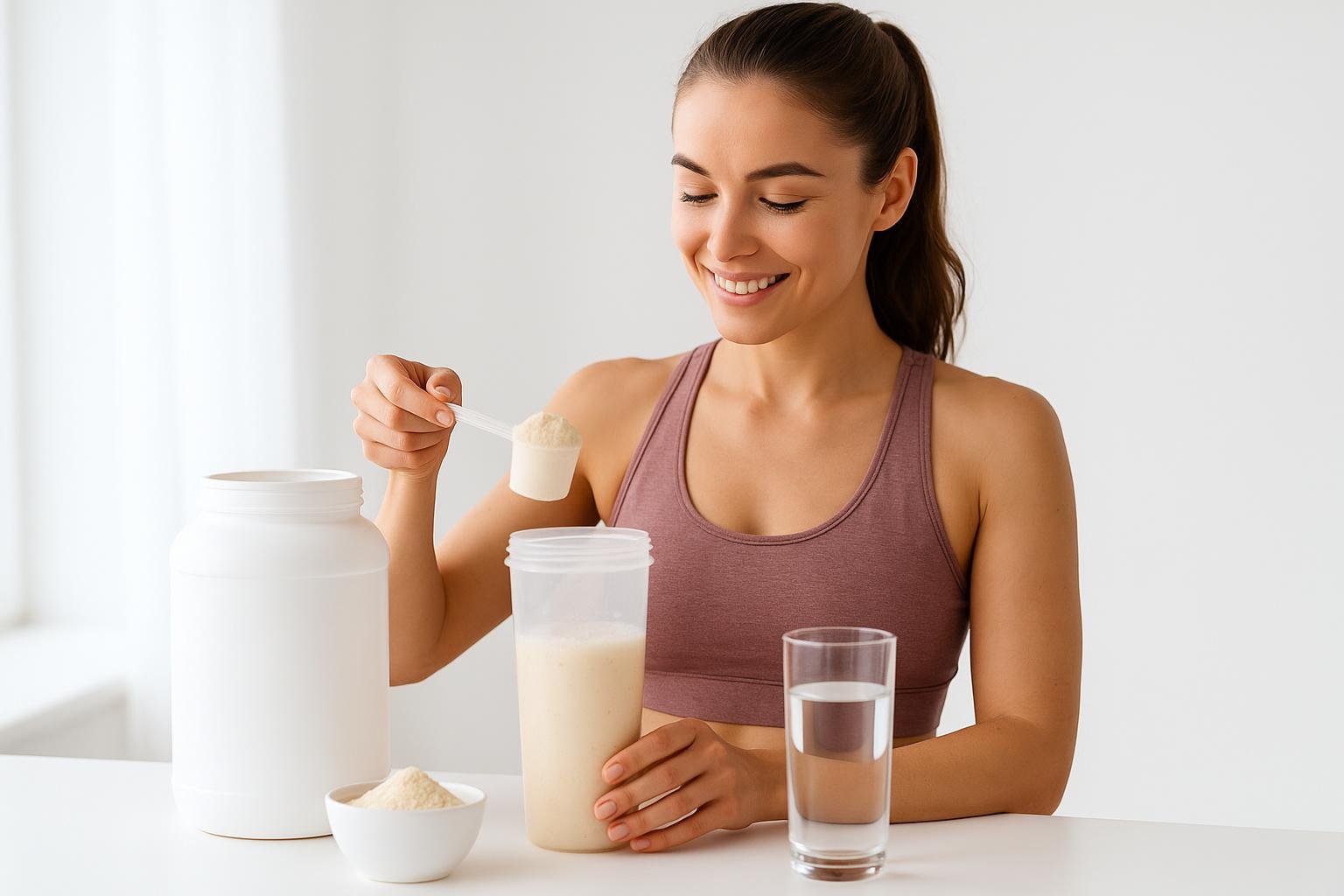
Protein Powder for Women: How to Compare Whey vs Pea, Labels, and Pregnancy Cautions
Research-based guide · revised 23 October 2026
Most women do not need a “women’s protein powder” so much as the right protein type, label profile, and safety fit for their situation. The practical decision is usually whey vs plant protein, flavored formula vs single-ingredient simplicity, sport certification vs basic use, and whether pregnancy, lactose issues, or iron intake changes what makes sense.
What matters more than “for women” on the front label
The strongest starting point is the Nutrition Facts panel, not pink packaging. The FDA explains that labels list protein in grams per serving, and that the Daily Value for protein is 50 g. That does not mean everyone needs exactly 50 g daily, but it gives you a fixed comparison point. FDA also notes that 20% Daily Value or more is considered high for a listed nutrient, which matters when you compare nutrients such as iron or sodium across powders.
For most shoppers, the useful questions are:
- How many grams of protein do I get per stated serving?
- How large is that serving?
- Is it whey, pea, or another source?
- Does it contain flavor systems, sweeteners, or digestive add-ins?
- Is it dairy-free?
- Does it have a third-party sport certification?
- Are sodium, iron, and added sugars acceptable for my routine?
The reason this matters: “women’s” branding often adds lifestyle language without changing the fundamentals that actually determine fit.
Two named examples: same category, very different buyer
| Product variant | Protein source | Protein per serving | Other sourced details | Who it may suit | Reason to skip |
|---|---|---|---|---|---|
| NOW Sports Organic Pea Protein, Organic Powder | Organic yellow pea protein isolate | 14 g per 2 level scoops (20 g) | 0 g added sugars, 200 mg sodium, 3.2 mg iron (20% DV), vegan, USDA Organic, Non-GMO Project Verified, Informed Sport; one-ingredient formula on manufacturer page | Dairy-free shoppers, simple-ingredient buyers, some vegans | Lower protein density than many whey isolates; pea-only profile may not match what a whey buyer wants; sodium is not zero |
| Thorne Whey Protein Isolate – Chocolate | Whey protein isolate | Page presents 21 g protein per serving and also lists 25 g whey protein isolate as an ingredient amount | NSF Certified for Sport; flavored formula with cocoa, sweetener ingredients, bromelain and papain; manufacturer says whey isolate contains less fat and lactose than whey concentrate | People wanting flavored whey isolate with sport certification | Dairy-derived, not single-ingredient, and the page includes a California Prop 65 warning plus pregnancy-related consultation advice |
These examples show why a simple “best for women” list can mislead. One product leans toward ingredient simplicity and dairy avoidance; the other leans toward flavored convenience and competitive-sport reassurance. Neither is automatically better for all women.
How to choose between whey and pea protein
If you want the shortest ingredient list
NOW Sports Organic Pea Protein, Organic Powder is a clear example of a minimalist approach: one protein ingredient, no added sugars listed, and explicit label details including sodium and iron. That can be easier to evaluate if you are trying to avoid sweeteners, milk ingredients, or multi-part flavor blends.
If you want a flavored whey isolate
Thorne Whey Protein Isolate – Chocolate fits a different use case. It is a formulated product rather than a one-ingredient powder, and the manufacturer highlights NSF Certified for Sport status. That matters more for some athletes than for casual use, especially when label verification is part of the buying decision.
If lactose or dairy is the main issue
Whey isolate is often marketed as lower in lactose than whey concentrate, and Thorne states that distinction on its product page. Still, lower lactose is not the same as dairy-free. If you need to avoid milk-derived ingredients altogether, a pea protein variant is simpler to screen.
If iron content matters to you
Some plant-based powders contribute meaningful iron on-label. In the NOW example, the manufacturer lists 3.2 mg iron, which it marks as 20% DV. That is not proof the powder is a better health choice overall, but it is a concrete nutrient difference that some shoppers may care about more than flavor.
Pregnancy changes the question
This is where a generic fitness article often goes wrong. The World Health Organization says evidence does not support high-protein supplementation in pregnancy as a routine benefit and notes possible harm signals in some outcomes. The American College of Obstetricians and Gynecologists emphasizes getting key nutrients from a healthy eating pattern during pregnancy rather than treating specialty supplements as automatic upgrades.
That does not mean protein powders are always inappropriate in pregnancy. It means “more protein” should not be sold as an automatic pregnancy advantage, and product choice needs more caution around ingredients, warnings, nausea tolerance, and total diet. If pregnancy is relevant, this is not the same shopping decision as buying a post-workout powder for general fitness.
A worked example: how to compare pack value without guessing quality
Suppose two tubs look similar online, but one has 14 g protein per serving and the other has 21 g per serving. Before assuming one is a better deal, calculate the protein delivered per container.
- Write down servings per container from the label.
- Multiply servings per container by grams of protein per serving.
- Compare the total grams of protein delivered, not just tub size.
- Then check whether one product also brings extras you may not want, such as flavoring systems or digestive enzymes.
Hypothetical arithmetic: if Product A had 30 servings at 14 g, it would deliver 420 g total protein. If Product B had 20 servings at 21 g, it would also deliver 420 g total protein. If their prices were different, the cheaper one would offer the lower cost per gram of protein delivered. If one requires a larger scoop size or adds sweeteners you dislike, that may outweigh a small cost advantage.
This kind of math is more useful than broad claims about a product being “made for women.”
Limits of what the evidence can really tell you
The NCCIH notes that dietary supplements are not reviewed by FDA for safety and effectiveness in the same way as drugs before they are marketed. That is one reason certifications and transparent labels matter. But it is also why manufacturer claims about digestibility, recovery, or superior absorption should not be treated as proven long-term health outcomes for the finished retail product unless independent clinical evidence is cited.
The National Institute on Aging also frames protein within overall dietary pattern: a variety of nutrient-dense protein foods matters, and plant protein sources can be lower in saturated fat. In other words, powder can be a convenience tool, not a substitute for diet quality.
Who may want extra caution before buying
- People who are pregnant or trying to conceive, because pregnancy is not a routine high-protein upsell category.
- Anyone with milk allergy or strict dairy avoidance.
- Competitive athletes who need a verified sport certification rather than a generic powder.
- Shoppers who are sensitive to sweeteners, flavor systems, or digestive add-ins.
- Older adults using powder to replace meals instead of supplementing a broader eating pattern.
If your real question is not protein powder alone but age-related supplement choices more broadly, see Supplements for Women Over 40: Evidence and Buying Guide. If you are also comparing other common add-on categories, our guides to collagen supplements and omega-3 fish oil supplements cover different evidence questions.
Next actions that actually help
Make a short list of two or three powders and compare them on delivered grams of protein, allergen fit, flavor complexity, sodium, iron, and certification. If pregnancy is part of the picture, treat that as a separate screening step rather than a minor footnote. And if a product’s main appeal is gendered branding without better label facts, it is probably not the strongest reason to buy.
Sources checked for this guide
- Daily Value on the Nutrition and Supplement Facts Labels
- Using Dietary Supplements Wisely
- High-protein supplementation during pregnancy
- Know Your Food Groups
- NOW Sports Organic Pea Protein, Organic Powder
- Thorne Whey Protein Isolate – Chocolate
- Healthy Eating During Pregnancy
Compare current listings
As an Amazon Associate, MySeekly earns from qualifying purchases. These links open Amazon US search results, not verified exact listings. Check the current variant, seller, regional label and delivered cost. You do not need to purchase a product to use this guide.
Search Amazon US for whey protein isolate chocolate powder
Search Amazon US for organic pea protein powder unflavored
Research-based editorial guidance, not a hands-on product test or a medical review. Product photos and illustrative images do not show our own test results. Read our editorial approach.