Face Mist vs Setting Spray: How to Choose for Hydration, Glow or Makeup Hold
Research-based guide · revised 23 October 2026
If you mainly want comfort, glow, or a less powdery finish, choose a hydrating face mist; if you want makeup to stay put and shine to stay down, choose a true setting spray. Those are not the same job, and the label usually tells you which camp a product belongs to.
The easiest way to avoid a disappointing purchase is to decide your main use case before browsing: refreshing skin, softening makeup, or extending wear. A lot of products use the word “mist,” but some are skincare-leaning refreshers while others are makeup-locking sprays built around film-forming ingredients. That split matters more than hype.
What this category really breaks into
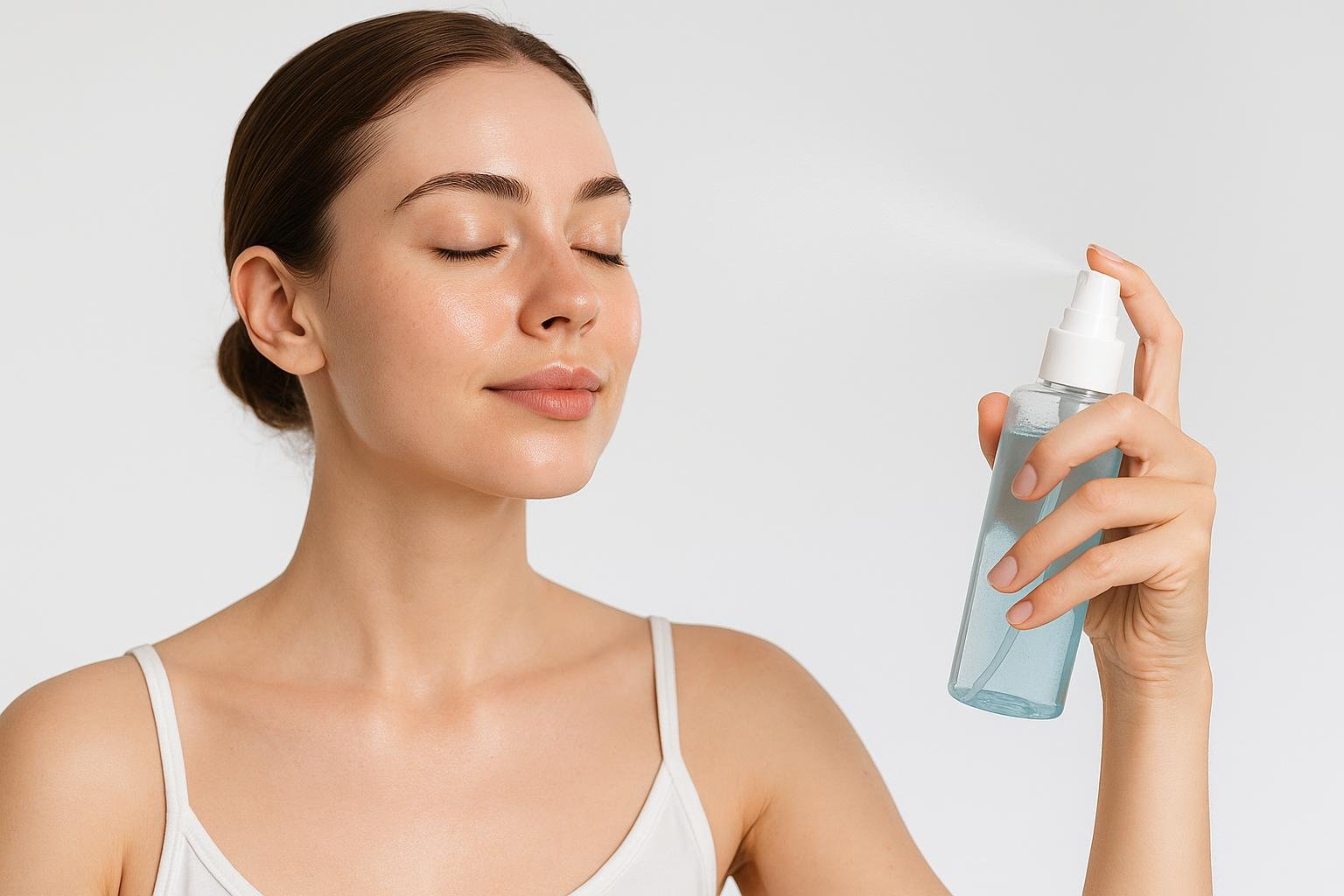
A hydrating mist usually aims to add a fresh feel, reduce a dry or tight sensation, or make makeup look less flat. A setting spray usually aims to help makeup resist fading, transferring, or getting shiny. Those goals can overlap a little, but not perfectly.
For dry skin, the American Academy of Dermatology is clear on the bigger picture: a proper moisturizer does more heavy lifting than a mist. That means a mist can be a useful comfort step, but it is not the product category to rely on if dehydration is your core skin problem. If your makeup looks dry because your base routine is too light, replacing moisturizer with a mist is usually the wrong fix.
Ingredient screening also has limits. The FDA notes that fragrance-related ingredients can matter for people with sensitivities, yet labels may still group scent materials under “fragrance” or “perfume.” So if you already know you react to fragrant skincare, a mist with essential oils or fragrance allergens deserves extra caution even when the product sounds soothing. Also, the FDA explains that terms like “hypoallergenic” do not have a required federal definition, so that word alone should not settle the decision.
Two exact examples with different jobs
| Product | Main positioning | Finish | Notable formula cues from source | Who it may suit | Reason to skip |
|---|---|---|---|---|---|
| Rare Beauty Always an Optimist 4-In-1 Mist (Translucent) | Hydrate, prime, set, refresh | Natural radiant | Bi-phase oil-and-water formula; niacinamide, sodium hyaluronate, panthenol, glycerin, squalane; multiple botanical oils/extracts; labeled dermatologist tested, suitable for sensitive skin, noncomedogenic | Shoppers wanting glow, a less powdery look, or a multitasker for prep and refresh | Less ideal if you specifically want matte shine control or if you avoid fragrance/essential-oil blends |
| Maybelline Facestudio Lasting Fix Setting Spray Matte Finish | Lock in makeup and control shine | Matte | Up to 16-hour wear claim; 3.4 fl oz; Alcohol Denat. listed second; includes film-formers such as PVP and AMP-Acrylates/Allyl Methacrylate Copolymer | Shoppers prioritizing longevity and a less shiny finish | May be a weaker fit if your skin or makeup tends to look dry, since the brand itself points drier users toward a more hydrating spray |
Read the positioning as a claim, not a test result
Rare Beauty describes a radiant bi-phase mist, while Maybelline positions Lasting Fix for matte makeup hold. The ingredient lists and stated finishes explain the intended roles; they do not prove which product will wear better on your face. The manufacturer's wear-duration and testing statements are not MySeekly test results. If you know fragrance or alcohol-containing formulas do not suit you, check the exact current label before buying.
A quick decision worksheet
- Your makeup problem: If you look dull, powdery, or tight by lunchtime, start with a hydrating mist. If makeup slips or gets shiny, start with a setting spray.
- Your preferred finish: Radiant or skin-like points toward a glow-leaning mist. Velvet or shine-free points toward a matte setting spray.
- Your ingredient priorities: If fragrance is a known issue, inspect the label carefully and do not rely on “suitable for sensitive skin” or “hypoallergenic” wording alone.
- Your routine overlap: If you already use rich moisturizer, dewy primer, and cream makeup, another glow-heavy mist may be redundant. If you already use mattifying primer and powder, an extra matte spray may push the look too flat.
- Your value check: Compare bottle size, how often you will actually use it, and the delivered cost. A larger bottle is not automatically better value if it duplicates steps you already own.
Worked example: choosing for a dry-looking foundation
Imagine you wear a medium-coverage foundation that looks cakey around the nose and cheeks by afternoon. Your instinct might be to buy a “setting” product, but the evidence-based decision is to first ask whether the problem is wear or dryness. If the makeup is still in place but looks tight or powdery, a hydrating mist category makes more sense than a matte wear-extending spray. In that scenario, a product positioned like Rare Beauty’s 4-in-1 mist aligns better with the problem you are trying to solve.
Now flip it. If your makeup is breaking apart around the T-zone and you dislike shine more than you dislike dryness, a formula positioned like Maybelline Lasting Fix is the closer match. The key is that you are buying to solve the dominant failure point, not just buying whichever spray is trending.
How to compare pack value without guessing at deals
Availability and pricing can change by retailer and region, so treat any live listing as temporary. Instead of chasing claims about “better value,” use a simple check:
- Step 1: note the bottle size in fl oz or mL.
- Step 2: divide the shelf price by bottle size to get a rough unit cost.
- Step 3: add any shipping or minimum-order threshold.
- Step 4: ask whether you need a daily-use finishing spray or an occasional refresh product.
For example, if one mist is hypothetically $18 for 1.7 fl oz and another is $12 for 3.4 fl oz, they are not equal on unit cost. But the cheaper-per-ounce option still may not be better for you if the finish is wrong for your skin or it duplicates products already in your routine.
Who should skip this category entirely?
If your main issue is persistent dryness, flaking, or irritation, the AAD guidance suggests focusing first on a solid moisturizer routine rather than expecting a mist to fix the problem. You may also want to skip fragranced mists if you already know scent triggers irritation for you. For adjacent hydration categories, MySeekly’s guides to snail mucin serums, face oils for dry skin, and slugging moisturizers may be more relevant than another spray.
Next steps
Before you buy, decide whether you want refreshing hydration or makeup hold. Then check finish, fragrance, and routine overlap. If you narrow the choice to one hydrating mist and one setting spray, compare bottle size and delivered cost rather than assuming the pricier option performs better. That approach will usually get you closer to the right product than any generic “best of” list.
Sources checked for this guide
- Rare Beauty Always an Optimist 4-In-1 Mist (Translucent)
- Maybelline Facestudio Lasting Fix Setting Spray Matte Finish
- American Academy of Dermatology: Dermatologists’ tips to relieve dry skin
- FDA: Allergens in Cosmetics
- FDA: Cosmetics Safety Q&A: Hypoallergenic
Published by MySeekly Editorial. This is an editorial explanation of published information, not a hands-on test, medical review or personalised treatment plan. Check current product labels. Our editorial approach.