Vitamin C Serums for Hyperpigmentation and Glow: How to Compare Formulas That Make Sense
Research-based guide · revised 2026-10-30
If your goal is hyperpigmentation and glow, the smarter buy is not automatically the highest vitamin C percentage. A better first filter is: will this serum fit a routine that controls pigment triggers, especially daily sun protection, without causing extra irritation that can make marks linger? The American Academy of Dermatology says vitamin C is one over-the-counter ingredient that may help fade dark spots, but it also notes that irritation, acne, injury, hormones, and visible light exposure can all affect pigmentation.
What matters most for dark spots, before brand hype
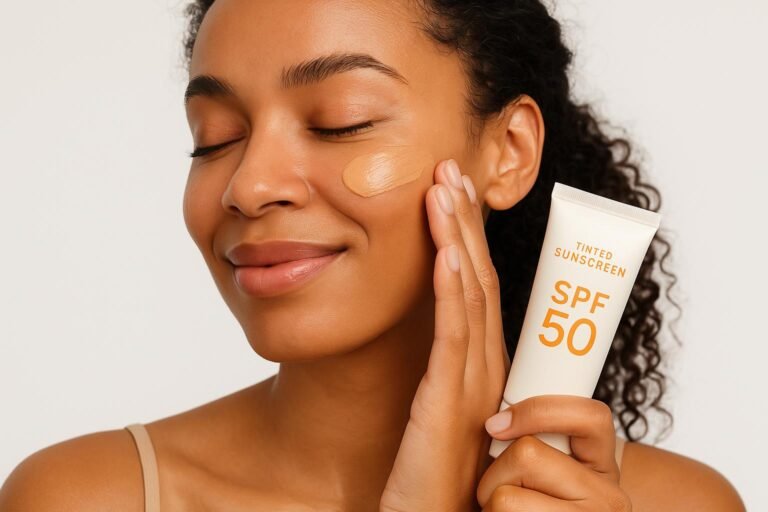
For this category, a serum is only one part of the decision. The AAD explains that dark spots can take months to fade and that broad-spectrum SPF 30+ is important; it also specifically highlights tinted sunscreen with iron oxide as useful because visible light can worsen some pigmentation concerns, including melasma. That means a vitamin C serum can make more sense as a supporting product than as a standalone fix. If your current routine has no reliable sunscreen step, that is a bigger gap than whether a serum says 10%, 15%, or 23%.
Another practical filter is safety language. The FDA says cosmetics generally do not need FDA approval before sale, so “FDA approved” should not be assumed from marketing. The FDA also warns that some skin-lightening products may contain ingredients such as mercury, and over-the-counter hydroquinone products are not approved for sale in the U.S. on its skin product safety page. For ordinary vitamin C shopping, that means established labeling and transparent ingredient lists matter.
Two exact vitamin C serum examples, and why they suit different shoppers
| Product variant | Vitamin C detail | Other notable ingredients or features | Why it may suit hyperpigmentation shoppers | Reason to skip |
|---|---|---|---|---|
| SkinCeuticals C E Ferulic | 15% pure L-ascorbic acid | 1% vitamin E, 0.5% ferulic acid; page also lists 0.3% carnosine and 1.0% Endophytol | Useful if you want a multi-antioxidant formula rather than vitamin C alone | Not a pigment-only formula, and manufacturer claims do not prove it outperforms rivals for dark spots |
| CeraVe Skin Renewing Vitamin C Serum | 10% pure vitamin C (L-ascorbic acid) | Three essential ceramides, hyaluronic acid, vitamin B5, MVE technology, protective packaging | Useful if you want a barrier-supporting formula and are trying to reduce routine harshness | May be less appealing if your priority is a simpler high-vitamin-C style formula |
| The Ordinary Vitamin C Suspension 23% + HA Spheres 2% | 23% vitamin C suspension | Water-free suspension format with hyaluronic acid spheres | Appeals to shoppers specifically seeking a higher-strength, more stripped-down vitamin C concept | Can overlap poorly with already-active routines, and a higher labeled percentage does not prove better fading results |
How to compare these formulas without falling for the percentage trap
It is tempting to treat vitamin C shopping like a race: higher percentage equals better dark-spot results. The sources here do not support that conclusion. The AAD supports vitamin C as one possible ingredient for fading spots, but it does not say the highest concentration is automatically best. That matters because irritation itself can keep pigmentation more noticeable in people prone to post-inflammatory marks.
So compare serums in this order:
- Can you use it consistently without irritation? If your skin is easily reactive or your routine already includes exfoliating acids or retinoids, a barrier-focused option may be the more realistic choice.
- What else is in the formula? SkinCeuticals C E Ferulic is a broader antioxidant blend. CeraVe adds ceramides, hyaluronic acid, and vitamin B5, which changes the buying logic from “strongest active” to “routine support.”
- Is the packaging trying to protect the formula? CeraVe specifically says its serum uses protective packaging to help prevent oxidation. That does not prove superior real-world results, but it is a reasonable comparison point for vitamin C products.
- Are you already covering the bigger pigment variable: sunscreen? For hyperpigmentation, a serum and a well-matched sunscreen work as a pair, not as substitutes.
A worked example: choosing between antioxidant blend, barrier support, or high-strength styling
Imagine three hypothetical shoppers with uneven tone after acne marks:
- Shopper A already uses a simple cleanser, moisturizer, and tinted sunscreen, but wants a more elaborate antioxidant serum. SkinCeuticals C E Ferulic makes more sense than a bare-bones vitamin C option because the formula is positioned around multiple antioxidants, not just one active.
- Shopper B has dryness, stinging, or a history of overdoing actives. CeraVe Skin Renewing Vitamin C Serum is easier to justify because the manufacturer positions it around ceramides and barrier support in addition to 10% L-ascorbic acid.
- Shopper C mainly shops by headline percentage and likes minimalist formulas. The Ordinary Vitamin C Suspension 23% + HA Spheres 2% will look attractive, but that shopper should still ask whether a strong-feeling formula fits the rest of the routine. A higher labeled percentage is not proof of faster or better spot fading.
How to assess value without inventing live prices
Price changes too often to treat one serum as the permanent value winner, so compare delivered cost rather than bottle size alone. A simple worksheet:
- Step 1: note the bottle size in mL.
- Step 2: divide the current checkout price by mL for a rough unit cost.
- Step 3: adjust for routine overlap. If one serum also fills your “barrier support” slot, it may reduce the need for another step.
- Step 4: discount hype around concentration if the formula is more likely to sit unused.
Hypothetical example only: if Serum X costs $40 for 30 mL, that is $1.33 per mL. If Serum Y costs $28 for 30 mL, that is about $0.93 per mL. Those are not identical values, but Serum X could still be the better fit if its packaging or supporting ingredients mean you are actually willing to keep using it.
When to skip a vitamin C serum entirely
Skip or delay the purchase if you do not yet have a dependable sunscreen habit, if your current routine is already irritating your skin, or if the pigmentation is new, worsening, pregnancy-related, or difficult to identify. The AAD notes that causes of dark spots vary, including melasma and post-inflammatory pigmentation, and persistent cases may need dermatologist guidance rather than another cosmetic serum. Also avoid vague “whitening” or unlabeled fading products, especially from uncertain sources, because the FDA has warned about unsafe ingredients in some skin-lightening items.
How this guide differs from other vitamin C pages
If your main concern is lower-cost options for reactive skin, see Best Vitamin C Serums for Sensitive Skin Under $40 in 2026. If your dark spots routine may need a different active rather than another antioxidant, Best Mandelic Acid Serums for Acne & Hyperpigmentation 2026 and Kojic Acid Serums for Dark Spots and Uneven Tone are more specific comparisons. And if glow is your finish goal, not just fading marks, a daily pairing with Tinted Sunscreens SPF 50 for Daily Wear: How to Choose a Glow Finish may matter more than changing serums again.
Next actions
Choose one lane before you browse: multi-antioxidant formula, barrier-supporting vitamin C, or higher-strength minimalist vitamin C. Then check the full ingredient list, packaging style, and whether your daytime routine already includes broad-spectrum sunscreen that you actually use. For hyperpigmentation, the best purchase is usually the serum you can pair consistently with pigment-conscious sun protection, not the one with the loudest label.
Sources checked for this guide
- American Academy of Dermatology: How to fade dark spots
- FDA: Is It Really FDA Approved?
- FDA: Skin Product Safety
- SkinCeuticals C E Ferulic product page
- CeraVe Skin Renewing Vitamin C Serum product page
- The Ordinary Vitamin C Suspension 23% + HA Spheres 2% product page
Compare current listings
As an Amazon Associate, MySeekly earns from qualifying purchases. These links open Amazon US search results, not verified exact listings. Check the current variant, seller, regional label and delivered cost. You do not need to purchase a product to use this guide.
Search Amazon US for vitamin C serum dark spots face
Search Amazon US for L-ascorbic acid serum for uneven skin tone
Research-based editorial guidance, not a hands-on product test or a medical review. Product photos and illustrative images do not show our own test results. Read our editorial approach.